
When actuaries sound the alarm, it’s time to take notice.
These are professionals whose risk assessments drive trillions in global investment decisions and their warnings of financial catastrophe matter.
The Institute and Faculty of Actuaries The Emperor’s New Climate Scenarios report estimates that global GDP could contract by 50% between 2070 and 2090 if climate change remains unchecked. This isn’t mere speculation; it’s maths from experts.
We must avert this climate crisis, and its impact on our planet and people, and invest in a way that supports the companies motivated by long-term global agendas that make a difference, rather than short-term monetary gains. Asset managers control the capital. They vote on corporate boards. They have the power to demand change. But are they using it?
Who is holding companies accountable?
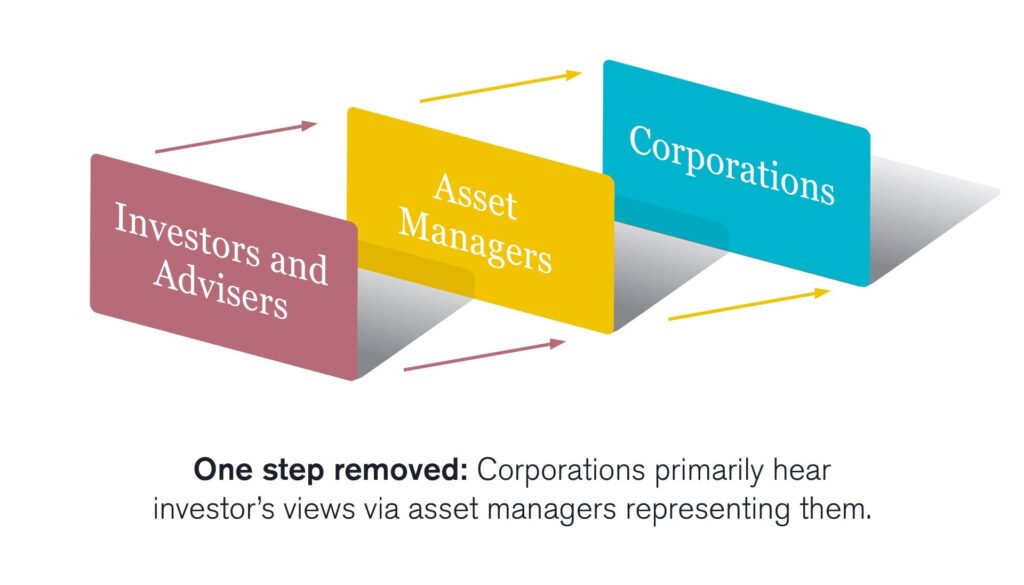
The question of whether sustainable investment can create real-world change is one we’re laser-focused on answering. As investors, Paradigm Norton is one step removed from being able to directly hold corporations accountable. Our lever is engaging with asset managers to use their power effectively and ensure stewardship effectiveness.
Philosophy matters. Traditional engagement focuses on financial returns, governance and transparency – only where it affects profits. We demand more. We look for asset managers who have ambitions to be a force for good by taking a holistic view: investigating pollution, exposing modern slavery in supply chains, and acting as good global citizens. Not all issues that harm people or planet are yet materially affecting investment returns, but the harm is real. Sooner or later, prices and returns are likely to catch up with the reality of the harmful impacts.
We urge asset managers to use their voting rights to influence corporate behaviour on sustainability, governance and long-term value creation. Without this, meaningful change is impossible.
The problem of limited transparency
Research and data on stewardship effectiveness remain scarce. Yes, asset managers publish information, but comparisons are difficult. Clients can’t tell who’s actually holding organisations accountable and to what extent it’s possible for asset managers to influence corporations to make lasting positive changes.
FinanceMap’s report on The State of Asset Manager Stewardship on Climate Lobbying investigated the world’s largest asset managers. It found that only a small group of leading firms conduct robust stewardship of climate lobbying activities. The results are damning. Only 10 of the 39 asset managers scored a B- or above. European asset managers scored higher, while North American scores dropped between 2023 and 2024. Some of this is due to the ESG backlash that saw US-based asset managers abandon Climate Action 100+ and the Net Zero Asset Managers Initiative.
The standards of responsible investment practices by asset managers were found to be “shocking and disappointing” in ShareAction’s report, The Point of No Returns 2025. Its 2024 Voting Matters report found shareholder resolutions at an all-time low, highlighting the “continued failure of the asset management industry to exercise its shareholder voting power to hold some of the world’s largest companies to account on their environmental and social impacts.”
Stretching the ambition for change
Given the information gap, we previously carried out our own research in 2023 investigating the level of engagement activities, voting habits, targeted engagement activities, collaboration, and reporting. This year, we completed our most rigorous stewardship research yet on the asset managers in our PNr (responsible) portfolio, and prospective asset managers.
We sent detailed questions to asset managers and gathered written responses. We defined what good practice looks like, assessed the companies against our expectations and met with managers to dig deeper. We urged them to lobby for change. The feedback was very positive; they welcomed our clear expectations.
As part of this work, we also jointly wrote an open letter to asset managers, calling for stronger net-zero commitments. We included the responses in our research findings. Some asset managers have set net-zero targets to reduce emissions from investments, and while others have made no commitment whatsoever.
But targets aren’t enough. Some asset managers aren’t reporting at all, and some aren’t reporting in enough detail. We need to encourage asset managers to go further. For example, if they have seen a decline in investment emissions, how have they achieved this? It could be they’ve divested from a high-emitting company rather than seeing companies make an actual reduction in emissions. The planet needs real reductions in emissions, not merely technical changes to investments.
We believe it’s necessary for asset managers and others to push for change through other mechanisms. In a roundtable conversation with an asset manager, we asked about the limits of what change we can expect engagement to achieve and how else they seek to influence positive change. As investors in listed companies, engagement is likely to be the best tool we have, but we also need government policies and regulations to change. We urgently need to move away from short-term thinking, particularly while a dysfunctional market fails to address carbon emissions.
Voting: an underused lever for change
Voting is one of the most powerful shareholder tools, yet there is a disappointing underuse of voting power. The ShareAction Voting Matters 2024 report found that only two of 73 resolutions on climate received majority support, stating, “This low level of support continues a downward trend since 2021, when, despite fewer resolutions being filed, average support was at an all-time high of 43%. Now it is just 23%.”
Directors get re-elected despite inaction on climate, and the most convincing tool in the armoury sits unused. This is why thorough research on how asset managers are using their voting powers is so important.
To give an example, RTX Corporation is one of the largest US aerospace and defence companies. At its 2025 AGM, shareholders proposed a resolution requesting disclosure on significant lobbying and expenditure. However, three asset managers in our study took three different positions: one voted for, one didn’t vote, and one voted against. This inconsistency is a problem and further illustrates that corporations aren’t being held to account by most shareholders.
Where stewardship could drive progress
Are asset managers using their power as we’d hope? Certainly, there’s always more that can be done. Forward-thinking asset managers, Legal and General Asset Management, set minimum expectations for climate transition plans, including the mining and diversified metals sector, in 2024. Mining companies produce the critical minerals essential for the energy transition, and responsible long-term investors must support decarbonisation efforts.
BHP Ltd is a global resources company that mines essential resources like iron ore and coal. After voting against BHP’s Climate Transition Action Plan (CTAP) in 2021, LGAM repeatedly engaged with the company to provide feedback on its assessment framework. BHP made significant improvements, and in 2024, this was the first transition plan that LGAM had supported for a mining company.
When asset managers raise their voices, change can happen. But forward-thinking asset managers remain in the minority. Just 20% of the vote is needed to get the attention of a Board of Directors – if 20% or more of votes are cast against a resolution, the company should explain its next steps when announcing the voting results. So, although there is hope, we’re still a long way from global corporations feeling a sense of urgency; meanwhile, we hurtle towards possible 50% GDP contraction. Carbon emissions, biodiversity collapse, plastic pollution, gender pay gap, and modern slavery aren’t distant threats; if nothing changes, they’re certainties.
At Paradigm Norton, we firmly believe that businesses can be profitable and responsible when they integrate commitments to planet and people and reset their mission to become a force for good. We’re committed to relentless scrutiny, fierce advocacy and amplifying client voices for maximum effect.
Investing places your capital at risk. The value of investments can go down as well as up, and you may not get back the amount you originally invested. Sustainable investments carry additional uncertainty – the environmental or social benefits expected may not be achieved. The information and opinions we share in this report are based on sources believed to be reliable, but we cannot guarantee they are accurate or complete, so they should not be relied upon as the sole basis for making investment decisions.

To find out more, download our Impact Report – Braver, bolder, better.